Every founder building a B2B product eventually has a version of the same conversation with someone who means well. Why are you limiting yourself to this specific segment? This could work for everyone. The advice usually comes from a genuine belief that a larger addressable market means a better business. It often leads to some of the most expensive early mistakes a startup makes.
The logic feels sound on the surface. More potential customers equals more potential revenue. Going broad keeps more options open. Specializing too early locks you into a path that might not be the right one. Each of these statements has a grain of truth in it. Together, they add up to a recipe for a product that serves no one particularly well and a go-to-market approach that burns resources without building a real customer base.
What the Niche Strategy Actually Is
The niche strategy is not about limiting ambition. It is about sequencing the capture of a market intelligently. The idea is to pick a specific, well-defined segment of a larger market, serve that segment better than anyone else is serving it, and use the credibility, learning, and reference customers that come from that dominance as a foundation for expansion into adjacent segments.
This approach consistently produces stronger businesses than going broad from day one for a simple reason. The focused company can build a product that is genuinely excellent for a specific type of customer. The broad company has to build a product that is acceptable to many types of customers, which usually means it is excellent for none of them. And in a market where customers have real choices, excellent beats acceptable every time.
How to Pick the Right Niche
The most useful niches tend to share a few characteristics. They have a problem acute enough that the people inside them are actively seeking better solutions, not just passively open to them. They are accessible without requiring an enormous marketing budget, meaning there are channels, communities, or connection points where you can reach the target audience without spending like a large company. And they are underserved by existing products, which are either too expensive, too complex, or too generic for the specific needs of that segment.
The right niche should be large enough that dominating it is worth the effort and small enough that you can actually dominate it with the resources you have. For most early-stage B2B startups, this typically means a specific industry vertical, a specific company size range, or a specific workflow within a broader category.
Building the Right Product for a Focused Niche
One of the strongest practical advantages of a niche focus at the product level is that it eliminates most ambiguity about what to build. When you know exactly who you are building for, every product decision can be evaluated against a specific, real person with specific, real needs. This clarity makes the product better and the development process faster because you are not making decisions about imaginary average users.
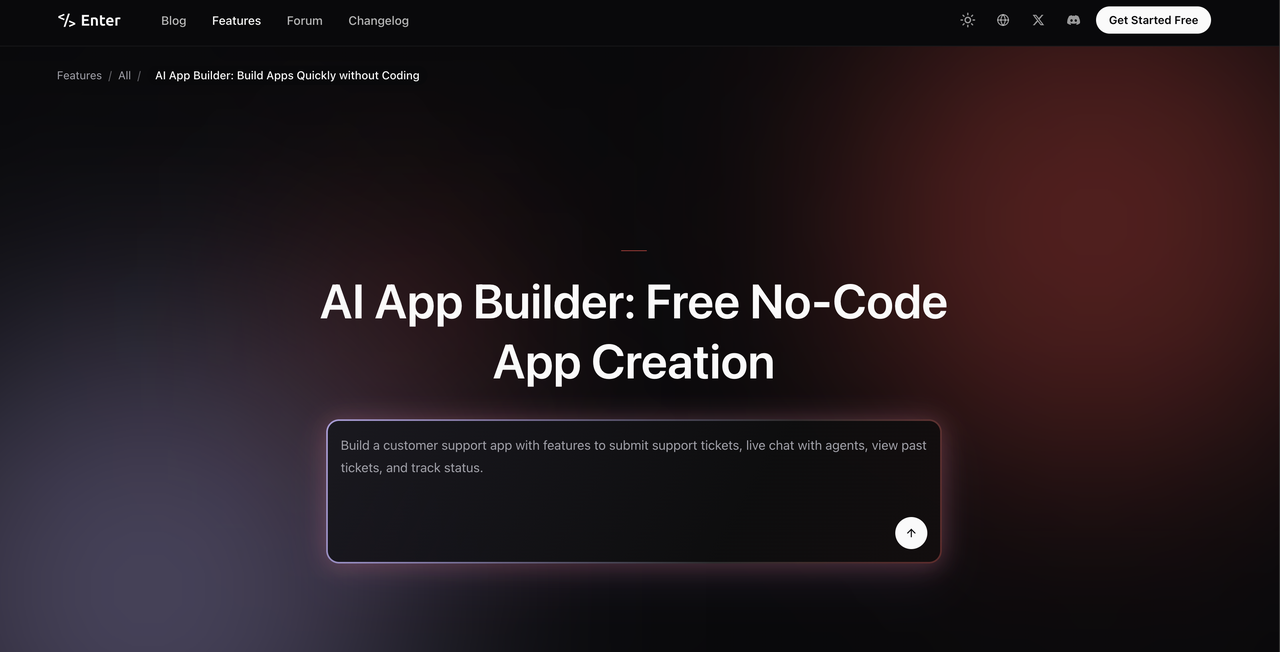
Tools like Enter Pro are particularly well-suited to this kind of focused building. When you know the specific problem you are solving and the specific person you are solving it for, you can build quickly without getting lost in feature scope. The product reflects the focus, and the customers feel that reflection in how well the product fits their actual workflow.
The Referral Advantage in Tight Markets
Here is one of the most underappreciated advantages of niche markets: they are tightly networked. Professionals in a specific industry vertical talk to each other regularly, share resources, attend the same events, and participate in the same online communities. When you build something genuinely excellent for this community, word travels in ways that no marketing budget can replicate.
A product that is considered excellent within a specific professional community gets referred in conversations that happen without the founder’s involvement or awareness. This organic spread, once it starts, is self-sustaining in a way that paid acquisition is not. And the customers who arrive through referrals tend to have higher conversion rates, better retention, and stronger lifetime value than those acquired through most other channels.
Using an AI app builder to build features that reflect the specific workflows of your niche, rather than generic functionality that sort of fits many situations, is part of what makes the product referral-worthy. The customer who tells a colleague about your product does so because it does something specifically useful for their kind of work in a way that no generic tool manages.
The Expansion Plan
The niche strategy works best when the expansion plan is clear from the beginning, even if it is held loosely. What is the adjacent segment you will move into after dominating the first one? What is the natural progression from serving this specific type of customer to serving related types of customers? Having clarity on this shapes the product decisions you make in the niche phase so that expansion becomes a natural evolution rather than requiring a significant rebuild.
The companies that master this sequence, deep niche focus followed by deliberate adjacency expansion, tend to build businesses that are both more defensible and more valuable than the ones that tried to serve everyone from day one.
Founders who have successfully used the niche strategy also tend to develop a much deeper understanding of their customer than founders who tried to go broad from the beginning. When you are serving a specific segment and talking to them constantly, you accumulate a picture of their situation, their language, their concerns, and their decision-making process that is almost impossible to replicate any other way. That depth of understanding becomes a self-reinforcing advantage: the better you know the customer, the better the product gets, and the better the product gets, the more customers you attract from that segment.
One of the clearest indicators that a niche strategy is working is the quality of the inbound interest it generates. When the product is excellent for a specific type of customer and well-known within that community, the customers who come to you are already sold on the category and evaluating whether your product is the best option within it. That is a completely different conversation from the one you have with a prospect who found you through a broad search and is not even sure the problem you solve is their priority. The niche strategy, done well, changes the character of every sales conversation.