Garage doors are made with several moving pieces that work in perfect equilibrium. Of these components, torsion springs carry some of the heaviest workloads. If you’ve ever had to do a Clopay torsion spring replacement, you already know how important these springs are and how often they need attention compared to other parts.
Panels, tracks, and openers can survive for years with few problems, but torsion springs tend to wear out considerably faster. Understanding why this occurs will help homeowners avoid sudden breakdowns, minimize repair expenses, and prolong the life of the complete garage door system.
What are Torsion Springs and why are they important?
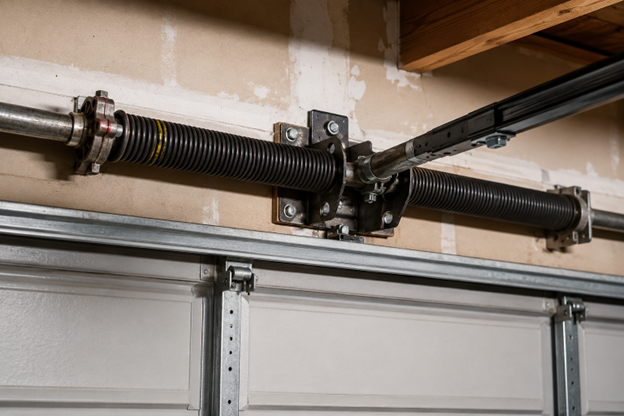
Torsion springs are coiled firmly and are located above your garage door. Their main job is to counterbalance the weight of the door so that it is easy to open and close, either by hand or with an opener.
The torsion springs each time your garage door moves:
● Close the door. Store the mechanical energy.
● When that door opens, unleash that energy.
This cycle of tension and release, over and again, is what makes your door open and close smoothly. But that’s also why these springs tend to go bad before most other parts.
The Real Reason Torsion Springs Wear Out Quicker
1. High Cycle Use
Torsion springs are rated for a certain number of cycles. A cycle is one complete opening and closing of your garage door.
On average:
● Standard springs will endure about 10,000 cycles.
● High-cycle springs can survive for 20,000 cycles or more.
If you open and close your garage door many times a day, those cycles add up rapidly. That means many homes have their springs wear out in 5-7 years, much faster than other parts.
2. Mechanical continuous stress
Unlike panels or tracks that are relatively static, torsion springs are always under tension. A lot of force is being held by the springs, even while your garage door is not in use.
This continual tension leads to:
● Metal fatigue
● The coil gradually weakens.
● Higher chance of breaking suddenly
Repeated stretching and compression over time damage the structure of the spring.
3. Exposure to temperature variations
Garage doors are exposed to the outer environment, especially in places with extreme weather. The effect of heat and cold upon the metal in torsion springs.
● High heat can induce expansion and reduce tension efficiency.
● Metal can become brittle and more prone to breaking in cold conditions.
These environmental conditions increase wear and diminish the total life of the springs.
4. No Scheduled Maintenance
Many homeowners pay attention to the outside of the garage door, but not to the inside portions, such as torsion springs.
If not properly maintained:
● Springs might dry out and lose their lubricant.
● Friction increases in operation.
● Friction accelerates wear
Routine maintenance and inspection can greatly extend the life of torsion springs, but if neglected, they deteriorate much faster.
5. Garage Door System Out of Whack
If you have an unbalanced garage door, the torsion springs are working harder than they should be.
This could be because:
● Tracks not aligned
● Old wires
● Irregular weight distribution
This overexerts the springs, shortening their lifespan and increasing the risk of failure.
6. Bad Quality or Incorrect Installation
Not all torsion springs are the same. Low-quality springs or improperly sized springs will greatly limit the lifespan of the springs.
Incorrect installation can result in:
● uneven distribution of stress
● Some parts of the spring wear out faster.
● Higher chance of sudden fracture
This makes a professional installation important for long-term performance.
How Torsion Spring Wear Affects Other Parts
When torsion springs start to break, it’s not just the springs themselves that are impacted; the entire garage door system is impacted.
You might see:
● Greater load on the opener motor
● Door hard to open
● More stress on panels and hinges
In extreme situations, this could even mean a Clopay garage door replacement if the door has gotten misaligned or broken owing to improper tension.
Warning Signs Your Torsion Springs Are Failing
If you notice the early warning signs of wear, you can prevent a sudden breakdown.
Looking for:
● The garage door feels heavier than it did before
● The door opens with a shock or unevenly in motion.
● You hear loud snapping or cracking sounds.
● The door won’t stay open, right?
These are symptoms that your torsion springs are wearing out and will need to be replaced soon.
Why You Should Get a Professional Replacement
Torsion springs are extremely tense and are one of the most dangerous components to work with without sufficient training.
When you try to fix it yourself, you might:
● Severe injury
● Wrong Installation
● More damage to the system
Our professional technicians have the skills and experience to safely replace springs and get your garage door back into proper balance.
Trusted Pros Clopay Garage Door Systems
If you’re working with high-quality systems like Clopay, you want to collaborate with experienced individuals who understand the standards and requirements of the brand.
Elite Garage Doors and Gates is a dependable service provider for homeowners who need to fix or repair their garage door systems. From springs to panels, their staff ensures each component is put correctly and performs at its best.
Final Thoughts
Torsion springs may not be the biggest garage door part, but they do the most heavy lifting – literally. Their regular use, exposure to stress, and climate make them more prone to wear than any other portion of the system.
Knowing the reasons for their rapid wear can help you take preventive steps, avoid expensive repairs, and keep your garage door safe and efficient.
If you see symptoms of wear and tear or a drop in performance, it’s best to get the problem fixed early on with expert Clopay torsion spring replacement or repair. That way, you can save yourself time, money, and potential safety hazards.
A spring system that is properly maintained will do the trick to provide smooth, safe, and reliable performance for years to come.